
You want a bathroom that cleans fast, holds up to busy family life, and still looks smart in a Charlotte home. This article shows tile and accessory choices that balance low maintenance, moisture resistance, and lasting style so you can pick options that match your budget and contractor skills.
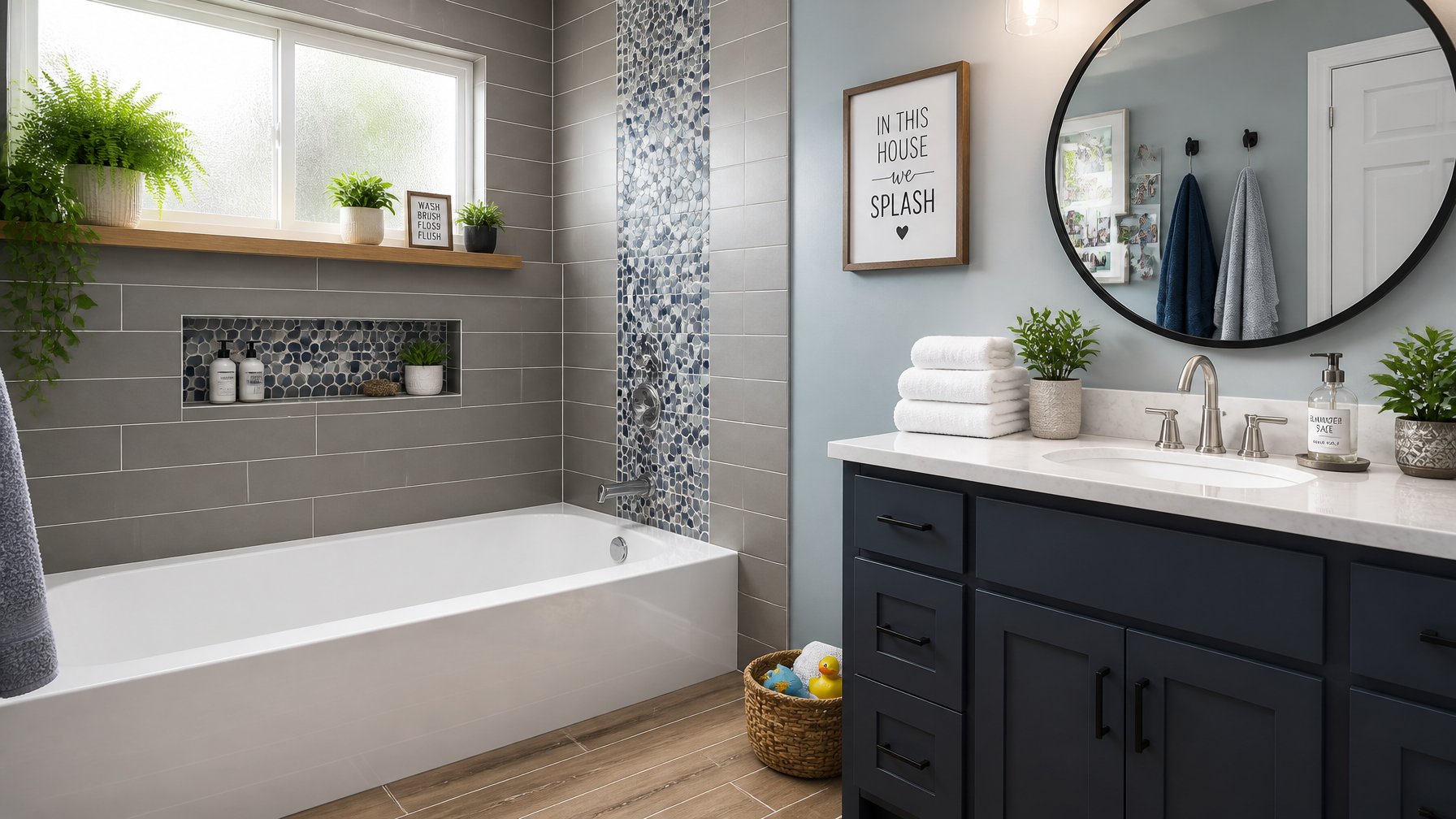
Compare durability, cleaning needs, and installation tradeoffs so you get a bathroom that stays functional and tidy with less effort. The tips focus on real choices like grout type, tile size, and water-safe finishes, and suggest what to ask a remodeler to make sure the job fits your household routine.
1) Large-format porcelain slab flooring for quick mopping
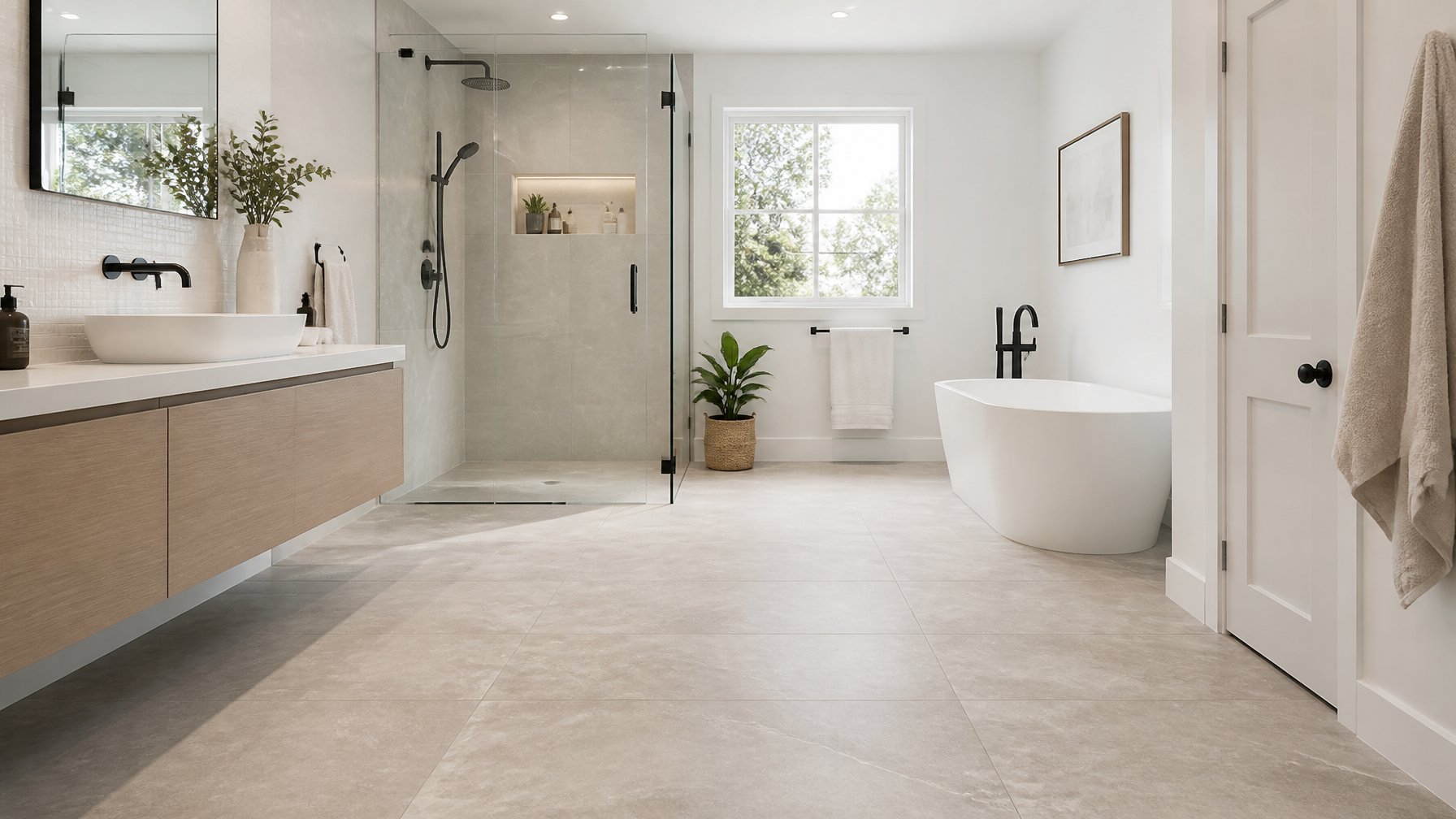
Large-format porcelain slabs cut down grout lines, so spills and hair wipe up faster. Homeowners should compare tile sizes (24x24 vs 48x48) and grout joint width when shopping.
Porcelain is dense and stain-resistant, but check PEI rating for durability. Ask about slip resistance and matte finishes to balance safety and easy cleaning.
The tradeoff: bigger tiles can be heavier and cost more to install. They may need a flatter subfloor and an experienced installer; ask contractors about floor prep and leveling.
For more bathroom ideas and installer tips, see the homepage. Images should look like realistic home-improvement photos showing large, neutral slabs and minimal grout.
2) Matte-finish anti-slip subway tiles for shower floors
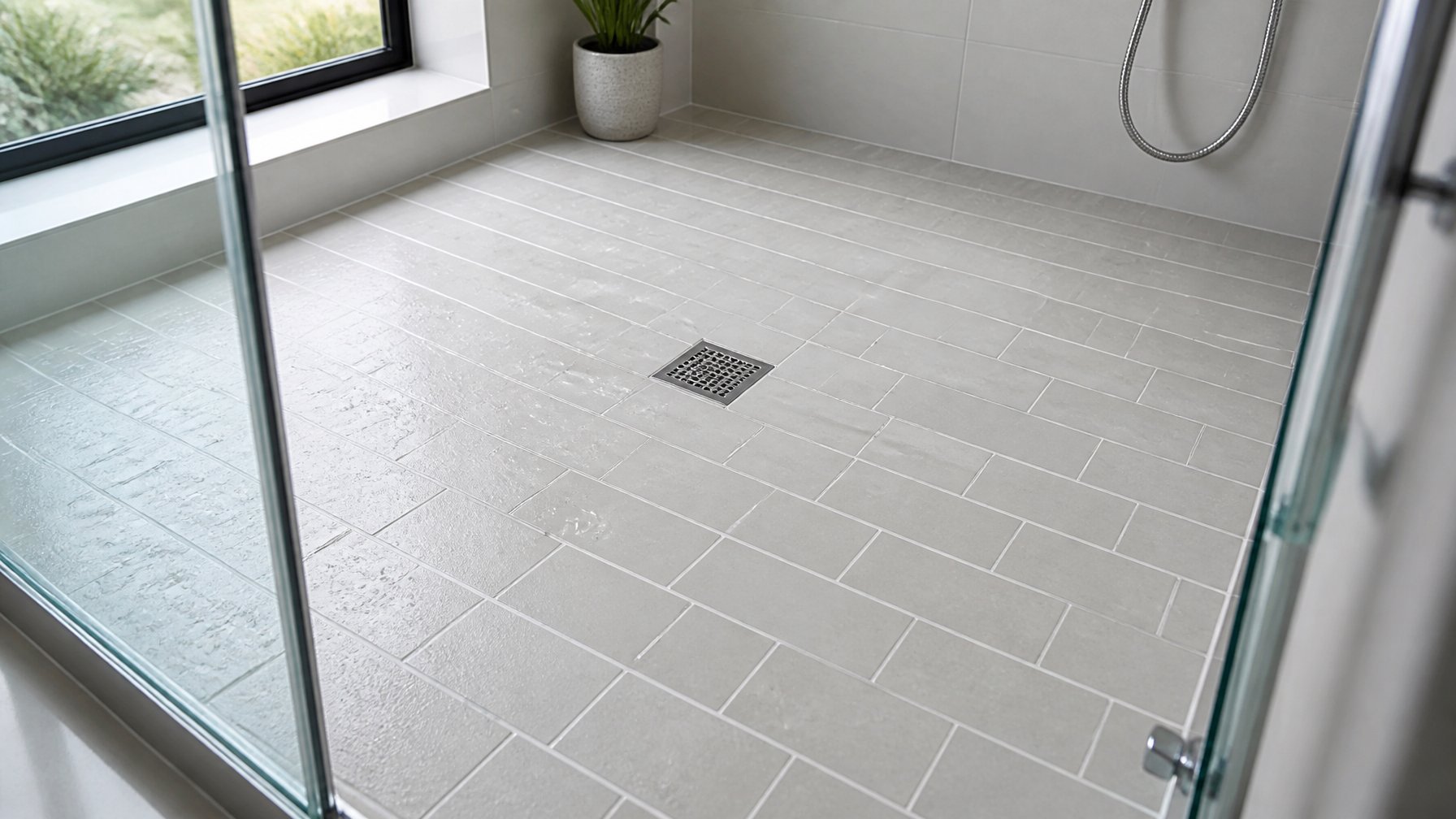
Matte-finish subway tiles give a classic look while cutting glare and hiding water spots. They come in small formats that help create more grout lines, which improves traction compared to large tiles.
Homeowners should compare slip-resistance ratings (COF) and grout type. Ask about textured surfaces and whether the tile’s finish meets ADA or local safety recommendations. Tradeoffs include slightly more cleaning of grout vs. safer footing.
They should also consider tile size and layout. Smaller tiles or a mosaic pattern increases slip resistance but may take longer to install and cost more in labor.
For more guidance on choosing tile and installers, see our homepage. Images should show realistic shower settings with matte tiles, grout lines, and gentle textures to set proper expectations.
3) Porcelain wood-look plank tiles for moisture-prone bathrooms
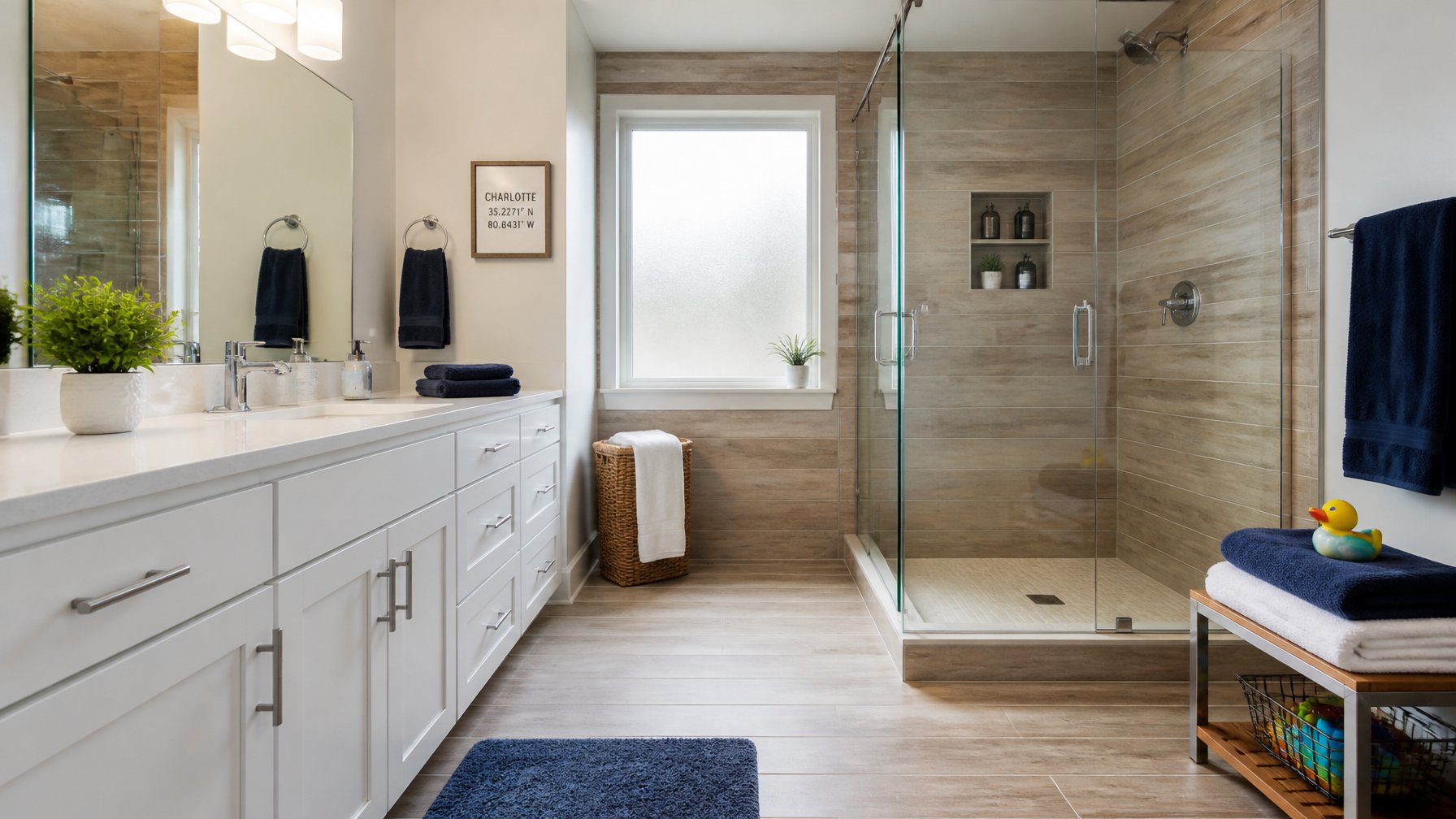
Porcelain wood-look planks give the warm look of hardwood with water resistance. Homeowners should compare PEI wear ratings and rectified vs. non-rectified edges to match traffic and grout choices.
They must ask about matte vs. gloss finishes. Matte hides water marks better, while textured planks add slip resistance. Tradeoffs include grout color—darker grout hides stains but shows soap scum differently.
Tile size matters for small Charlotte baths. Narrow planks can make a room feel longer; wider planks look more modern. They should also check thickness for floor heating and confirm suitability for wet areas.
Consider installation patterns and realistic images of styles to choose a look that fits the home. For installation help and guidance, see the homepage.
4) Rectified-edge large-format wall tiles to minimize grout lines
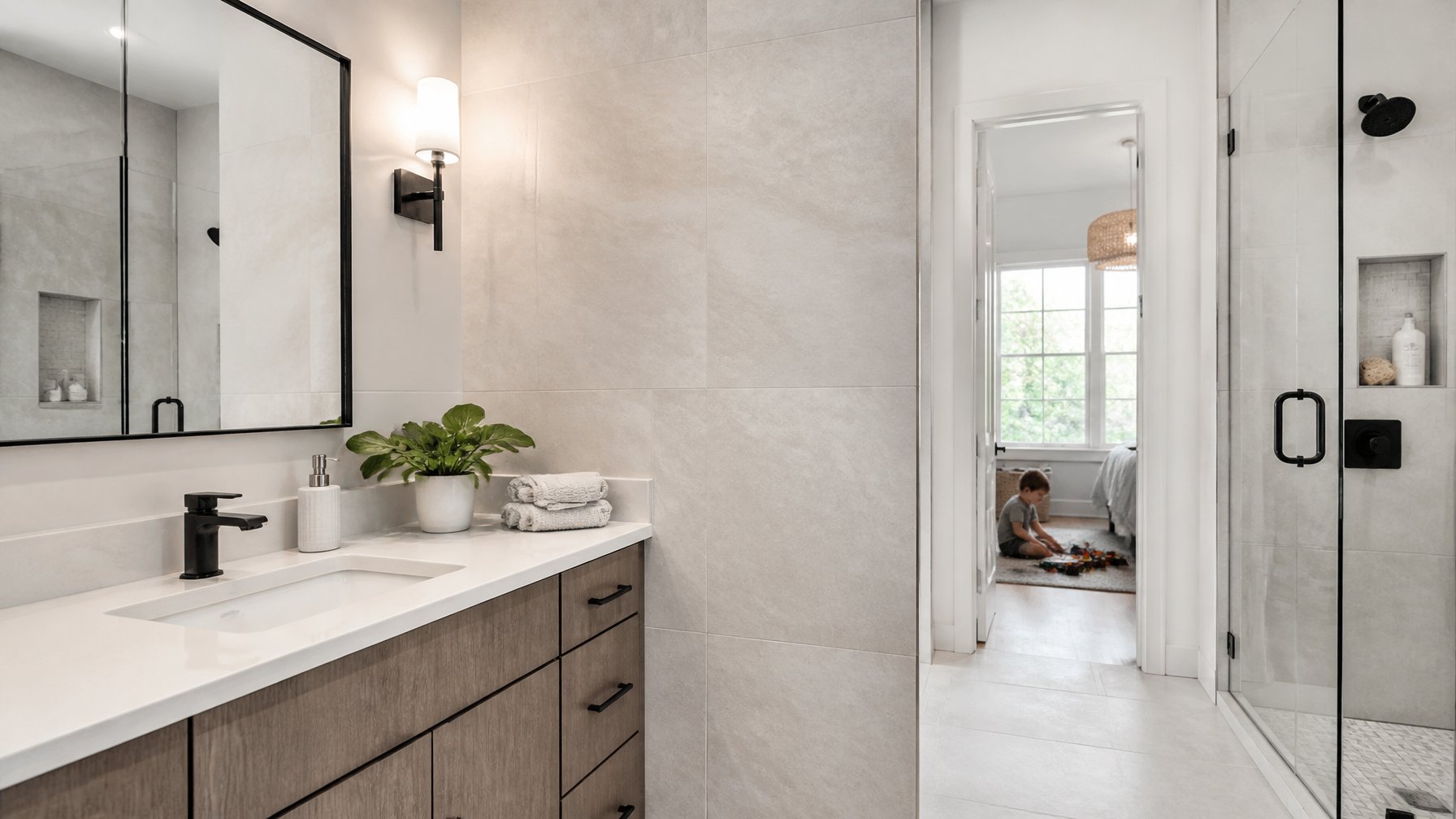
Rectified-edge large-format tiles fit together with very thin grout joints. Homeowners should compare tile sizes, edge precision, and recommended grout width. Ask the supplier for recommended spacers and a sample to check wall flatness before buying.
They reduce cleaning and make small bathrooms feel larger. Tradeoffs include higher installation skill and the need for flatter walls, so compare installer experience and price. Check warranty and return policies.
They pair well with simple grout colors for a seamless look. Ask whether the tile requires special adhesives or movement joints, and whether the installer will prepare walls to the needed flatness. See the homepage for more guidance on choosing materials.
5) Pre-sealed natural stone-look porcelain for durability
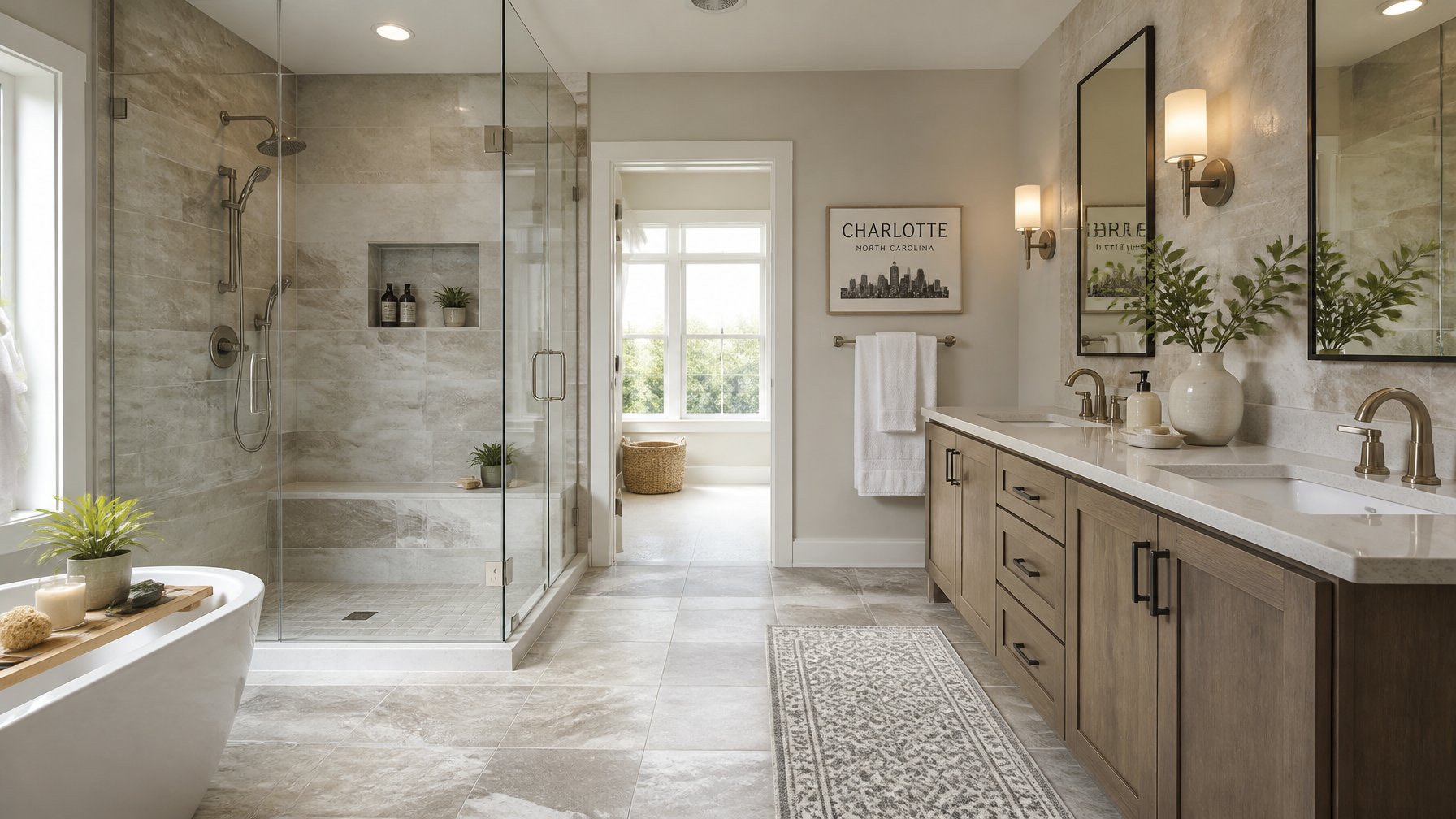
Pre-sealed natural stone-look porcelain gives the look of marble or slate with far less upkeep. Homeowners should compare PEI rating, moisture absorption, and wear layer to pick tiles that stand up to heavy foot traffic and frequent mopping.
Ask whether the tile comes factory-sealed or needs an additional sealant. Pre-sealed tiles cut maintenance time, though they may cost more up front. Check grout joint width and color to avoid stains and frequent regrouting.
They should weigh slip resistance (COF rating) against finish—polished looks better but can be slick when wet. For help with product choice and installation, see the homepage for guidance on selecting tiles and installers.
6) Light-gray epoxy grout for easier stain resistance
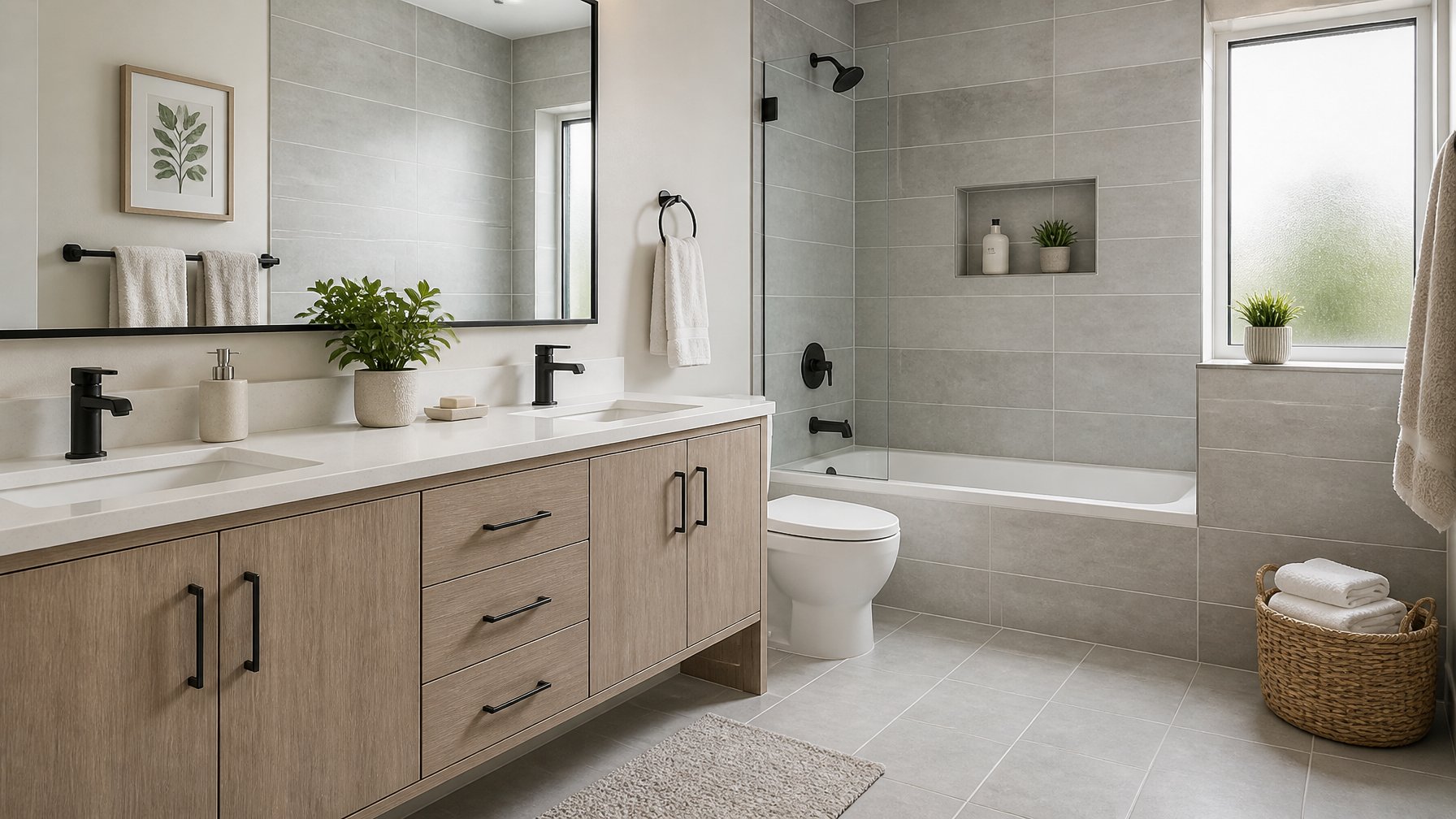
Light-gray epoxy grout resists stains better than cement grout. Homeowners should compare epoxy formulas for flexibility, cure time, and colorfastness before buying.
Epoxy grout costs more and can be harder to tool. Ask manufacturers about working time and cleanup tips, and weigh faster stain resistance against a trickier installation.
They should match grout color to tile and traffic. Light gray hides dirt while keeping a bright look; darker grout hides grime more but can darken the room.
Consider hiring a pro for large areas or DIY for small bathrooms. For help finding trades or project planning, visit the homepage.
7) Waterproof vinyl plank flooring (rigid core) for upstairs bathrooms
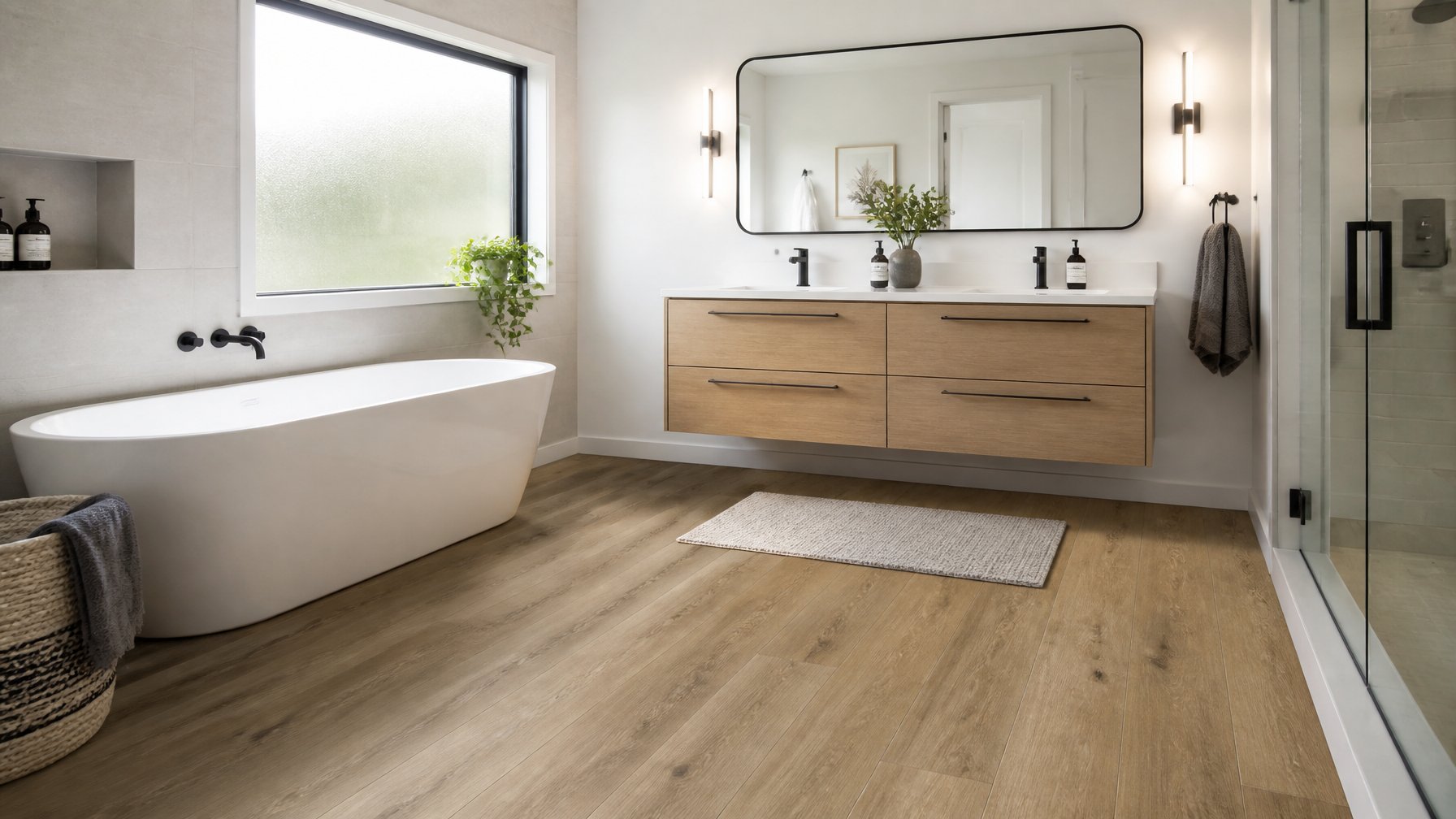
Rigid-core waterproof vinyl plank works well where moisture and foot traffic meet. Homeowners should compare wear-layer thickness, click-lock vs. glued seams, and warranty terms to match durability needs and budget.
Ask about underlayment needs and compatibility with radiant heat systems. The tradeoff: thicker wear layers cost more but last longer; thinner planks save money but may dent sooner.
Installers should check subfloor flatness and transitions to hallway flooring. They should also confirm water-tight sealing at toilet bases and vanity perimeters to avoid seepage.
For style, pick realistic wood or stone visuals that hide scratches and dirt. See flooring options on the homepage for product choices and installation services.
8) Heated towel rail to speed drying and reduce mold
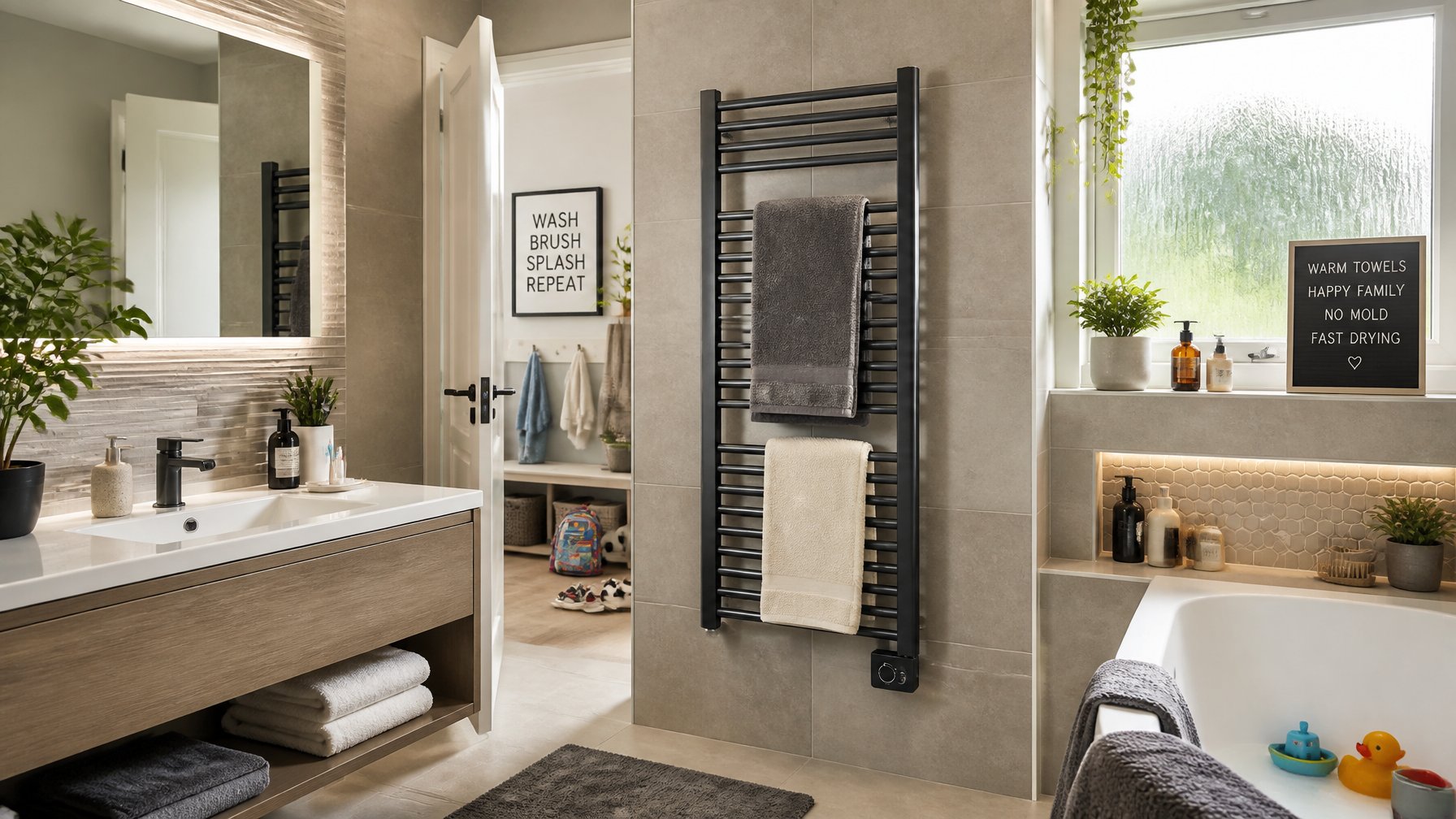
A heated towel rail helps towels and small linens dry faster, which cuts moisture that leads to mold. Homeowners should compare wattage and mounting type; higher wattage dries quicker but uses more power. Ask if a hardwired or plug-in model fits the bathroom wiring and code.
Choose corrosion-resistant finishes for wet Charlotte climates, like stainless steel or powder-coated metals. Consider rail spacing and bar thickness; thicker bars hold more heat but raise cost. Check power needs against the circuit to avoid tripping breakers.
They should weigh cost versus use: a low-cost rail warms towels but may not dry large loads quickly. For hands-on help or installation options, visit the homepage. Images should show realistic home-improvement scenes of rails in small, tiled bathrooms.
9) Full-height tile wainscot for easy-clean lower walls
Full-height tile wainscot covers the lower wall from floor to about shoulder height, keeping splashes and scuffs off drywall. Homeowners should compare ceramic, porcelain, and glazed subway tiles for durability, grout color, and cost.
Ask about grout type and sealer options because darker grout hides stains but lighter grout looks cleaner. The tradeoff is maintenance versus appearance; rectified porcelain needs less upkeep but costs more.
Measure how high water and kids or pets usually reach to set the tile height. They should also check baseboard choices and transition trim so cleaning is simple.
Consider tile finish: matte hides marks better, while glossy wipes cleaner but shows smudges. For design ideas and contractor pairing, see the homepage.